Friday of the Third Week of Advent
There are a number of instances in the Bible where elderly women who never bore a child were, through God’s grace, blessed with a child. In today’s first reading, it is revealed that the wife of Manoah is sterile. In the ancient world, this was considered a great curse for a married woman, often leading her to be outcasted by society. However, an angel of the Lord appeared to her. She heard the wonderful words, “Though you are barren and have had no children, yet you will conceive and bear a son.” Although the woman may have been initially scared by the angel, she was moved by her faith and when the child was born, she named him Samson. This son, who would be dedicated to God, had a special role to play. “The boy grew up and the Lord blessed him; the Spirit of the Lord stirred him.”
Thursday of the Third Week of Advent
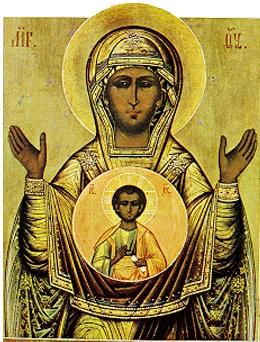
O come, O come, thou Lord of might,
Who to Thy tribes on Sinai's height
In ancient times didst give the law
In cloud and majesty, and awe.
Wednesday of the Third Week of Advent
Today, eight days before Christmas begins, the Church begins the “O Antiphons,” popularized in the Advent hymn "O Come, O Come Emmanuel." Sung as the antiphon each evening before praying Mary’s Magnificat, the “O Antiphons” also serve as the gospel acclamation for Mass. The antiphon each day celebrates the fulfillment of the messianic hopes of the Old Testament, and our hopes, all fulfilled in Christ Jesus. Today, we sing “Come, O Wisdom!”
Tuesday of the Third Week of Advent
Our God loves us in a dangerous way; the Lord is always giving opportunities for us to change our mind, to convert, to make a new path toward righteousness. I suspect God knows what we cannot bring ourselves to believe, which is that most of our decisions are at least partially clouded by misplaced priorities, sinful or selfish desires. We all need a lot of chances to turn around and change for the better. Perhaps this is why Jesus tells a story about a person who immediately rejects his father’s order, but then later does the right thing.
Monday of the Third Week of Advent
Today’s readings concern blessings and curses. In our family lore my maternal grandmother placed a curse on a neighbor during the Depression who had turned her in for working on the side (she hung wall paper) while collecting the tiny government dole for her widowed self and her eight children. This in the era of no safety nets. Of course the curse was given in Gaelic.
Memorial of St. Lucy, Virgin & Martyr
‘Tis the season for Christmas specials: The Grinch. A Charlie Brown Christmas, Home Alone, It’s a Wonderful Life. Set out some Christmas cookies, a bowl of Chex Mix, and a few mugs of hot chocolate. Add a snowy forecast, a few loved ones, and a screening of your favorite Holiday special, and you’ve got the perfect recipe for a Christmasy evening.
Feast of Our Lady of Guadalupe
Today’s feast of Our Lady of Guadalupe reminds me that through Mary, God came for all people, and especially to the most vulnerable. Jesus was born to this young Jewish girl in a manger, and about 1500 years later Our Lady appeared to an unassuming Indigenous man in present-day Mexico. Mary, whom the angel Gabriel consoles, “Do not be afraid, Mary…”, is then speaking the comforting words to Juan Diego, “Do not fear…Am I not here, I who am your Mother?”
The gospel reading from Luke (1:26-38) takes us to the Annunciation, which Pope John Paul II references in his apostolic letter, Rosarium Virginis Mariae, about Mary’s contemplation of Christ: “The eyes of her heart already turned to him at the Annunciation, when she conceived him by the power of the Holy Spirit. In the months that followed she began to sense his presence and to picture his features. When at last she gave birth to him in Bethlehem, her eyes were able to gaze tenderly on the face of her Son….Thereafter Mary’s gaze…would never leave him.”
And it seems that Mary’s gaze also never leaves the most vulnerable, or anyone who calls upon her as the Mother of Our Lord. She reassures us, just as the angel reassured her, “Do not be afraid.” We are not left alone, we are not without our Mother who also teaches us to turn our eyes toward her son, Jesus.
Mary, whose gaze would never leave Him, and whose gaze will not leave us if we call upon her in our need, seems to be speaking to us as well, “Do not fear…Am I not here, I who am your Mother?” Even when we are called upon to do difficult and challenging things, perhaps like Juan Diego, or even Mary herself, we are not left alone.
As we continue in this season of Advent preparation, may we have the courage to boldly echo the words of Mary, “Behold, I am the handmaid of the Lord. May it be done to me according to your word.” Our Mother reassures us, we are not alone.
—Eileen Miller
Thursday of the Second Week of Advent
Last week during Children’s Liturgy of the Word, I asked the children, “What does Advent mean?” Several of them said it meant that we should prepare for Jesus’ coming. Today’s readings speak of the coming of the Lord- both Jesus’ coming to this earth and the final coming of the Lord at the last judgment. During this time of Advent, how are we preparing for the Lord in our lives?
Wednesday of the Second Week of Advent
God sees us, calls us by name, and gives us rest. What welcome words these are in Isaiah and in Matthew. Who among us doesn’t need rest? God knows our every need and offers us what we need. Take a moment today to rest in God. Actually, take that moment now if you can, before you read further.
Tuesday of the Second Week in Advent
Today’s readings are full of hope. Each image is like a twinkle-light to brighten our grey days, calling us to trust and proclaim our God of tenderness and compassion. Our God seeks us out, forgives us, and brings new life. The images are meant to be savored slowly, a bit at a time. A helpful practice is to take a line or two at a time; and to ponder and steep ourselves in them, so that hope can permeate our entire being.
Solemnity of the Immaculate Conception of the Blessed Virgin Mary
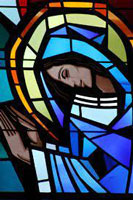
Today, on our parish patron Mary’s solemnity, let us approach her by some of the names found in her litany.
Theotokos
Theotokos is the name given to her at the Council of Ephesus in 431 when it was proclaimed that Mary is the Mother of God—the “God bearer”—not only the Mother of “the Christ.”
Saturday of the First Week of Advent
In today’s Gospel we find Jesus equipping and sending the Twelve disciples to participate with him in announcing and ushering in the Kingdom of God. Jesus calls us, too, to be active missionary disciples. As we consider this divine summons today, we might ask ourselves: are we motivated and are we willing? As we prayerfully ponder our vocation as disciples, it’s also worth considering whether we tend to fix our eyes on the task at hand or on the Pioneer and Perfector of our faith (Heb. 12:2).
Friday of the First Week of Advent
As we move closer to the Winter Solstice, when the length of time with the sun in our sky is at its shortest and the night at its longest, today’s readings speak to me on numerous levels. I’ve tended to dread the time change and earlier sunset with less natural light in the late afternoon and early evening, making it seem much later in the day than it actually is. And I struggle to resist the temptation to turn on all the lights to make the house as bright a possible. But I hear today’s readings as a call to enter into the darkness of Advent.
Thursday of the First Week of Advent
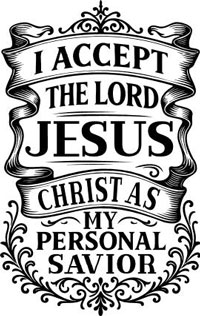
“Have you been saved? Have you accepted Jesus Christ as your personal Lord and savior?” Has anyone ever come to your door or stopped you in a public place and asked these questions? Usually the best thing is to not engage or argue with a “counter scripture.” Such an approach takes verses out of context. Nonetheless, what we hear from Matthew today puts “being saved” in a different light: “Not everyone who cries out LORD! LORD! will enter the Kingdom but only the one who does the will of my Father” (Mt 7:21).
Memorial of St. Francis Xavier, Priest
Whenever there’s a mountain in scripture, we know that God is especially near and palpable and that something transformative is happening. We find ourselves today envisioning the holy mountain of the Lord with Isaiah. God’s holy mountain, where all people not only have enough, but we feast together. Where the veil that separates people into “us” and “them” is lifted. Where death is no more. I read this and want to reprise the words we heard from Isaiah on Sunday, “Come, let us climb the mountain of the Lord!” (Is 2:3). Yes, let’s run and climb!
Tuesday of the First Week of Advent
Today’s Advent readings present us with an idyllic contrast to the world in which we live. A world where there natural enemies rest peacefully together and children are safe from any poisonous thing that might harm them. How much we long for a world like that when we listen (as we must!) to the news.
Monday of the First Week of Advent
They shall beat their swords into plowshares, their spears into pruning hooks; One nation will not raise the sword against another, nor shall they train for war again. —Isaiah 2:4
The above verse of the prophet Isaiah (2:4) is surely familiar. It was referenced by early Church Fathers Justin Martyr and Irenaeus. We hear it “rapped” in the musical Hamilton and recited in Amanda Gorman’s poem composed for President Biden’s inauguration of 2017. Quoted in President Washington's farewell address, other presidents swore their oath to the constitution on family Bibles turned to this verse. Cited in the Egypt-Israel peace agreement of Jimmy Carter, Anwar Sadat, and Menachem Begin, the sculpture “Let us beat swords into plowshares" graces the front of the United Nations building. To be sure, this text is familiar to us.
Saturday of the Thirty-fourth Week in Ordinary Time
In response to the Gospel reading for today, I want to say to Jesus: “Who doesn’t have a drowsy heart?” Especially these days!
Yes, some may owe their drowsy or weary or worn-out hearts to carousing and drunkenness, and that is a shame, to be sure. But, for most of us, I’d wager that our trouble is that third cause of a drowsy heart: the “anxieties of daily life.” They are relentless, aren’t they?
Friday of the Thirty-fourth Week in Ordinary Time
Although humanity has experienced violence, wars, and natural disasters (not counting global climate change) for more than the two thousand years since the gospels were written, it seems we still hear (or say) the end times must be near. And as a people, don’t we like to know, to predict, to plan for and have control over our lives and future? It seems to be part of our human nature. The disciples of Jesus similarly wanted to know what to expect and when.
Thanksgiving Day
On this Thanksgiving Day, the scripture readings highlight God’s generous giving. Although gratitude is on our minds today, our gratefulness can often be overwhelmed with the fears, frustrations, and bad news that surrounds us in our daily lives. The leper in today’s gospel reminds us that we need to pay attention, since God is working many miracles in our midst.