Tuesday of the Twenty-ninth Week in Ordinary Time
Most people are able to recall a time when they excluded others. Most people can also recall a time when they were excluded. These can be among the most poignant and painful memories, especially for kids and young adults. This happens in religion as well. We might remember that after Jesus commanded the crowd to “love you neighbor,” their first response was, ‘who is my neighbor?’ People want to know who they can exclude. This reality is the starting point for our first reading.
Monday of the Twenty-ninth Week in Ordinary Time
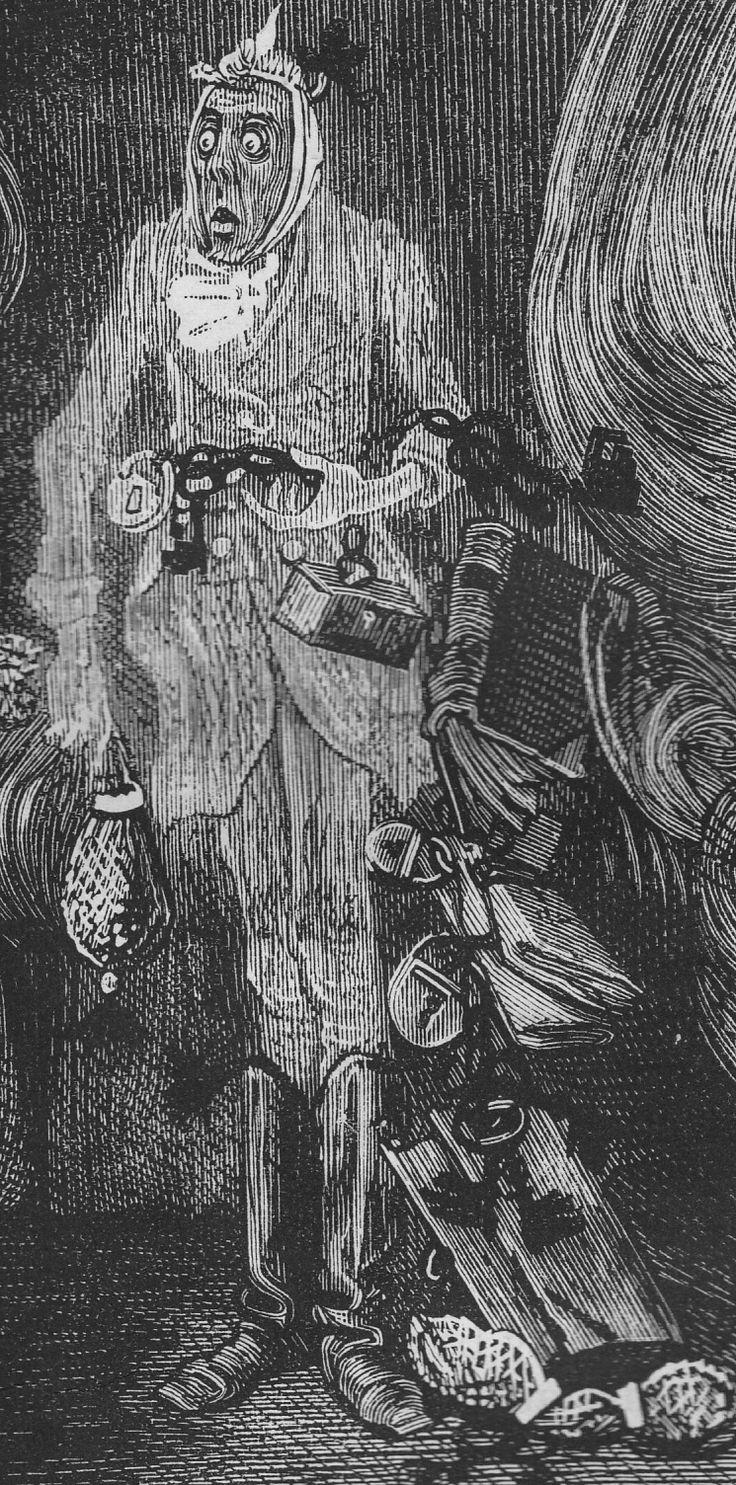
We learned recently that our son Kieran is going to be the understudy for Marley’s Ghost at the Cincinnati Playhouse in the Park production of Dickens “A Christmas Carol.” That got me thinking about today’s Gospel parable.
Memorial of Saints John de Brébeuf and Isaac Jogues, Priests, and Companions, Martyrs
"May the eyes of your heart be enlightened." —Ephesians 1:18
Today is the Memorial of Sts. Jean de Brébeuf, Isaac Jogues, and companions. They were French missionaries. Much of their ministry was evangelization to the indigenous people in Canada. Eventually, these missionaries were martyred for their faith. What strikes me about them is not only their courage to die for being Christian but that their conviction comes from their eyes being opened to the hope, wealth, and strength that can only come from Christ, especially as they got to know and developed relationships with the indigenous people.
Feast of St. Luke, evangelist
If I had to pick a favorite gospel of the bible, I would pick Luke’s gospel. I think my husband would agree, which is part of the reason we gave our oldest son that name. I mention this because today is the Feast of St. Luke, the author of both the Gospel of Luke as well as the Acts of the Apostles.
So, why would I choose Luke as my favorite gospel? For several reasons, which the New American Bible, Revised Edition, Introduction to this gospel outlines well (see the USCCB website). “No gospel writer is more concerned than Luke with the mercy and compassion of Jesus. No gospel writer is more concerned with…the importance of prayer, or with Jesus’ concern for women.” (Italics mine) Yes, that last one is pretty important to me.
Regarding the mercy and compassion of Jesus, the same Introduction tells us that throughout his gospel Luke calls on us to “identify with the master Jesus, who is caring and tender toward the poor and lowly, the outcast, the sinner, and the afflicted….”
Similarly, Luke’s gospel gives us the beautiful and powerful Canticle of Mary, also known as the Magnificat (Luke 1:46-55), which many composers throughout history have set to music.
As you can see, there are numerous reasons I would name Luke’s gospel as my favorite (if I had to pick!) and multiple reasons to be thankful for this Saint who was referred to by Paul as “the beloved physician” as he attended to Paul in his final days of imprisonment.
So, with gratitude for Luke the Evangelist, let us join in today’s entrance antiphon, proclaiming, “How beautiful upon the mountains are the feet of him who brings glad tidings of peace, bearing good news, announcing salvation!” (Isaiah 52:7) May God be praised.
—Eileen Miller
Memorial of St. Ignatius of Antioch, Bishop and Martyr
Today is the feast day of St. Ignatius of Antioch who is considered one of the “Apostolic Fathers”. These leaders were present in the early church immediately following the apostles of Jesus. His connection with St. John the apostle and St. Polycarp (Bishop of Smyrna) provide evidence of St. Ignatius’ important role during this time. It is because of these Christian believers that our Catholic church grew and flourished even amidst the persecution from the Roman Empire.
Wednesday of the Twenty-eighth Week in Ordinary Time
When Jesus enters your home, everything changes. This statement applies, whether we consider a physical home or the home of your heart. When Jesus enters these spaces, be prepared for a major shift! This is what happened to the pharisee in today’s Gospel; it will happen to us as we offer hospitality to our Lord sincerely and contritely, seeking the transformation that only he can bring.
Memorial of St. Teresa of Jesus, Virgin and Doctor of the Church
Christ has no body now but mine. He prays in me, works in me, looks through my eyes, speaks through my words, works through my hands, walks with my feet and loves with me here.
—St. Teresa of Avila
Today is the Memorial of St. Teresa of Avila, OCD (also called Saint Teresa of Jesus) who was a Carmelite nun and prominent Spanish mystic and religious reformer. Her teachings and writings are considered so particularly important that she was named the first female Doctor of the Church by Pope Paul VI in 1970. She wrote four books including an autobiography—Story of a Soul, The Interior Castle and The Way of Perfection. These have many practical examples about the life of prayer and its stages. Her quote (above) is a reminder to all of us of the transformative journey we are each called to take, becoming one with God, and knowing Jesus is relying on us to be his presence through all we are and do.
Monday of the Twenty-eighth Week in Ordinary Time

Jesus warns the crowds today, “It is an evil generation that demands a sign” (Luke 11:29), adding that the only sign he will give is the sign of Jonah. Jonah the prophet fled from God, but became an instrument of God’s glory, in spite of himself — swallowed by a great fish and transported to where he would rather not go — a metaphor for death and rebirth.
Saturday of the Twenty-seventh Week in Ordinary Time
The theme I see in both of today’s readings is reordering of norms. In the first reading, St. Paul writes to the Galatians that faith and baptism unites us in Christ. The Galatian Gentiles in baptism also become part of the people of the covenant and Abraham’s descendants, a controversial idea among Jews who saw themselves as the only members of God's people. Paul indicates that the Gospel is for all who accept it. This faith is what unites all believers and removes divisions among them. “There is neither Jew nor Greek, there is neither slave nor free person, there is not male or female; for you are all one in Christ Jesus,” (Galatians 3:28). This reading challenges us to look at what divides us especially in these polarizing times, inspires us to see what unites us, and helps us realize that we have more in common than we think.
Friday of the Twenty-seventh Week in Ordinary Time
In 1968, a third grade teacher in a small Iowa town named Jane Elliot conducted a simple classroom exercise in an effort to help her students understand what discrimination felt like. She separated her class into two groups: blue-eyed children and brown-eyed children. On the first day, the brown-eyed students were informed that they were genetically inferior to the blue-eyed students. Elliot told the brown-eyed students that they were not to play with the blue-eyed students. At recess they were not to use the jungle gym or the swings. They would not be allowed to have seconds at lunch. And instead of drinking straight from the water fountain, they would have to use paper cups. And on the second day of the experiment, Elliot switched the roles. In both cases, the classroom of students swiftly became divided. The “better” children were encouraged to feel superior and given extra incentives while the deprived group were often degraded, blamed for things, or had benefits taken away from them. By the afternoon, the superior children started to taunt and belittle their classmates. Division was inserted into the group and the classroom culture began to crumble.
Thursday of the Twenty-seventh Week in Ordinary Time
Bill, my husband, had a fun conversation with a friend of his recently in which his friend announced that his youngest child, a son, would soon be working to secure his Ohio driver’s license. With that, Bill’s friend announced, his son would be independent. He could basically take care of himself.
Bill responded, and this is nearly a direct quote: “Forget it, my friend. Once a parent, always a parent. It never ends. Parenting just takes different forms over time.”
Wednesday of the Twenty-seventh Week in Ordinary Time
We hear Paul admonish the Galatians in today’s first reading telling them, "If you, though a Jew, are living like a Gentile and not like a Jew, how can you compel the Gentiles to live like Jews?" He is more or less asking – how can you expect the Gentiles to live differently, when you yourself are not willing to make those sacrifices?
Tuesday of the Twenty-seventh Week in Ordinary Time
How would it feel to be able to say this about your life-story and good works? What a blessing to know that one’s time here on Earth is well-spent, bringing people closer to their God and more at peace with themselves and their neighbors. Could there be something the Spirit is calling you to be or do that would inspire others to glorify God?
Memorial of Our Lady of the Rosary
“I am amazed that you have so quickly forsaken the one who called you by the grace of Christ for a different Gospel.” —Galatians 1:6
So Paul writes to his foundling community in Galatia. Truths divergent from the ones Paul preached reared their ugly heads among neophyte believers there. This confused and unsettled those new converts. Paul’s concern in the early 50s can be applicable to many false gospels making the scene over two millennia since. One such is today’s abhorrent “prosperity gospel.” Another, and a far more common one, is a more divergent gospel than the prosperity travesty, as we will see.
Saturday of the Twenty-sixth Week in Ordinary Time
“But now my eyes have seen you.” —Job 42:5b
“Blessed are the eyes that see what you see.” —Luke 10:23b
I find it interesting that today’s readings refer to seeing. Job sees and understands the movement of God in the world and that he doesn’t have as much control as he thought. The disciples see the mysteries of the kingdom of God because of their faith in Jesus.
Memorial of Saint Francis of Assisi
Between today’s First reading from the Book of Job and our Psalm response, we get a pretty strong sense of God’s power and wonder especially in contrast to our own humble origins and limitations. Job is left practically speechless when God pretty much puts Job in his place, addressing Job out of the storm: “Have you ever in your lifetime commanded the morning and shown the dawn its place…Have you ever entered into the sources of the sea…Have the gates of death been shown to you, or have you seen the gates of darkness?” The author of this Old Testament book even has God using a little sarcasm in addressing Job, “You know, because you were born before them, and the number of your years is great!”
Thursday of the Twenty-sixth Week in Ordinary Time
While reading today’s readings, the word “other” caught my attention. Jesus appoints “other” disciples to help prepare the way for him. The definition for the word “other” includes “a person or thing that is different or distinct from one already known about.” It can also mean “that which is distinct from, different from or opposite to oneself.” This concept of “other” has been something I have heard about in recent conversations, articles and podcasts. Who are those we call “other” and how are we called to care for them and their needs?
Memorial of the Holy Guardian Angels
“The disciples approached Jesus and said,
‘Who is the greatest in the Kingdom of heaven?’
He called a child over, placed it in their midst, and said,
‘Amen, I say to you, unless you turn and become like children,
you will not enter the Kingdom of heaven.
Whoever humbles himself like this child
is the greatest in the Kingdom of heaven.
And whoever receives one child such as this in my name receives me.’”
The disciples approached Jesus with their query much like we would tend to do – through a worldly, self-centered, self-conscious lens. They, like we, assess greatness by the measuring rod of success, accomplishment, achievement, competition, power, authority. We compare ourselves to others and then seek to triumph over them. We strive and grasp for all the things we assume will make us great – great in our own eyes and great in the esteem of others.
Memorial of St. Therese of the Child Jesus, virgin and doctor of the Church
Today the first reading is taken from the final lines of the book of Job. Now, I have quite the personal connection with Job - that is, our names are very close in spelling. But on a deeper note, we all have a connection to our main character in a way.
You may or may not be familiar with the entire story of Job and his lamentations. If not, I recommend stopping now, read it, and come back to my reflection after. … Back already? Oh, you don't have time to read it? That’s okay, I didn’t reread while typing out my reflection. So let’s say that we did!
Memorial of St. Jerome, Priest and Doctor of the Church
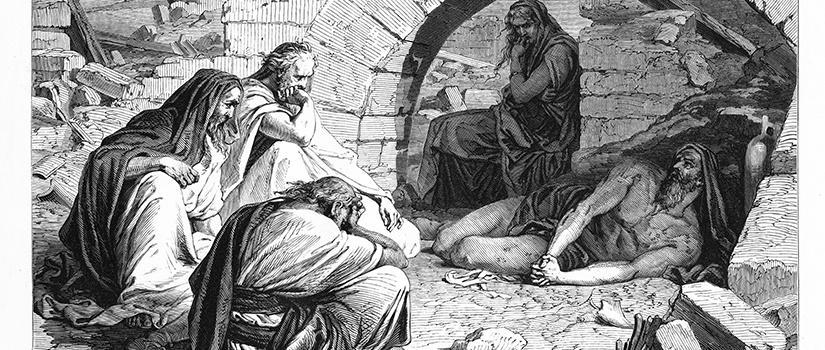
Poor Job. His life a shambles, he had every reason to wail against his Creator. But Job isn’t the only figure in a tet-a-tet with God in this oft-told tale. Satan is a character in the drama, too. In ancient traditions and in the long ago religions of the Tigris-Euphrates Valley, Satan’s original purpose was to serve as “prosecution attorney/accuser” regarding whether someone should or should not have the favor of the Almighty.