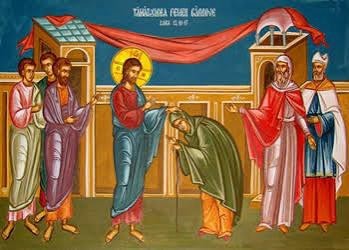
Monday of the Thirtieth Week in Ordinary Time
Eighteen years. Eighteen long years of being bent over, of seeing only the ground, unable to look people in the eye. Not just physically painful but constantly weighed down, ignored, pitied. She forgot what it felt like to stand tall. And then comes this moment: “Jesus saw her” (Luke 13:12).
Many of us have battles unknown to others. Some are so filled with worry that they’ve forgotten what a good night’s sleep feels like. Times when we don't want to think, speak, or even breathe — silent struggles that feel like being bent down to the ground of life. Standing up straight just doesn’t work anymore.
She didn’t ask to be healed, Jesus initiated it, the kind of grace that doesn’t wait to “have enough faith” or to say the right formula of prayers. Jesus just acts. It’s so very different from how the world works, or even how we think faith is supposed to work. Sometimes we feel like that poor woman, carrying burdens that bend us by the weight of grief, disappointment, struggle.
So how can we be healed? Perhaps it requires more than just a prayer for temporary relief. Maybe it means much more than that. Perhaps it requires total submission to the God whose very name is mercy, the God who redeems — admitting we cannot heal on our own. In the embrace of God, holy compassion reaches our deepest and most fragile parts where we find not judgement but compassion; not rejection, but acceptance; not despair, but hope. Then standing up straight in life becomes more and more a possibility.
True healing is not simply the absence of pain, but the restoration of wholeness, taking what is broken and making it whole again. Then we begin to see that our sadness and scars are not the end of the story, but the very place where Jesus is present, where Jesus “sees us.” Here our weakness becomes strength, our emptiness becomes fullness, and our wounded soul finds rest.
No more slouching with eyes fixed on the ground.
- Timothy J. Cronin